Reading and writing? Let’s start with storytelling
Before we made marks, we made sounds. Storytelling predates any form of written communication – the histories of entire civilisations were passed down through stories. While we no longer pass on history this way, storytelling remains one of the most valuable ways to learn culture, social norms and skills.
Speaking comes before writing
We all know that speaking comes naturally before holding a pencil. So why do we keep pushing down the age at which we expect children to write? By the end of Reception, at around five, England’s Early Learning Goals expect children to write recognisable letters, most of them correctly formed. Many of these children haven’t yet mastered their own bodies or speech. I’d argue our national obsession with age-related goals hurts children’s potential rather than harnessing it.
So many children, by the time they’re nearly seven, already feel they’re failing, and disengage because learning isn’t filled with wonder. Research shows that children who read for pleasure in primary school tend to do better throughout their education. For me, that doesn’t mean the highest grades – it means being an engaged learner. Building a love of reading is critical to building a love of learning, and stories open that door. If we want children to love reading, we must first help them love stories.
Let’s invite children to love stories – listening to them, making them up, acting them out, eventually wanting to read them. Then let’s invite them to write those stories down, and watch their eagerness to learn the skills they need to share their own stories with the world.
Stories carry wisdom
Stories have always been used to pass on social and cultural values. The Brothers Grimm, Aesop and Hans Christian Andersen began as storytellers as much as writers; many of them took stories passed on to them and gave them new written form. These stories endure because of the wisdom in them – the balance of archetypes and the lessons learned on the hero’s or heroine’s journey.
Teaching through storytelling
In Steiner Waldorf education, storytelling is used extensively. Topics are often introduced with a story, and after the children have slept on it, they recall it and begin work on the topic in earnest.
In a cross-curricular approach like this, the story might be about homes around the world or about numbers, but children are also absorbing vocabulary, grammar and sentence structure. Unfamiliar words help them build vocabulary and reading skills, and they learn to ask about meaning and usage.
As our children have grown, we’ve enjoyed writers like Dr Seuss and Lewis Carroll, who are wonderful for wordplay. Their invented words are used in ways children understand, so they recognise what’s real and what isn’t – a playful route into grammar.
Therapeutic stories
Therapeutic stories are a wonderful tool in the parenting basket, and one I’ve used a great deal. Healing Stories for Challenging Behaviour by Susan Perrow was one of the best books I was given when the girls were very little. (For a while I misread “challenging” as “naughty” and resisted it – but she means all of life’s hard situations.) The book shows you how to construct your own stories, which I’ve found invaluable.
I’ve used stories to express how I’m feeling, to build empathy and to help with ever more complex friendships at school. Even now my girls are older, I still use therapeutic storytelling to bridge a difficult subject, showing different sides through different characters. In a story there’s no blame or conflict: exploring things in the imaginative realm gives our souls time to reach their own resolution.
For young children, stories are especially important for conveying what’s expected of them, right and wrong, and an array of archetypes to help them navigate the world. I think it’s really important that girls see bold, fearless heroines and that boys see emotional, vulnerable heroes. As in all of life, balance is key.
Imagination and tomorrow’s world
How could the world meet today’s challenges without imagination? Imaginative thinking is what employers increasingly look for – it’s the spark that turns an idea into a business. Imagination is part of our purpose as human beings. I love the idea of a child coming to their desk and, instead of a flat worksheet, finding an opportunity to create something truly original – and being valued for it.
Human voices in a digital world
Let’s not underestimate how important it is for children to hear a human voice – and to see a real person, alive and engaged with a story. When we tell a story, we’re rooted in imagination, that place of endless possibility. Watching adults move easily from the everyday world into the world of imagination takes children on that journey too, building the invaluable skills of visualisation and free thought.
At home, storytelling is a foundation stone. Beginning with storytelling, my eldest became a voracious reader by ten. We nurtured her love of English with a library card, lots of storytelling and gentle invitations to write.
10 alphabet and story games to play anywhere
- Categories. Pick a category (colours, trees, animals) and a letter. Take turns naming something in that category until someone is stumped.
- Alphabet hunt. Take turns finding the next letter of the alphabet on something around you.
- Going on a picnic. “I’m going on a picnic and I’m bringing an apple…” The next person repeats the list and adds something beginning with B, and so on.
- I spy alphabet. Play I spy working through the alphabet in order.
- One-word story. Take turns adding one word to a story and see where it ends up.
- Rhyme time. Pick a word; everyone takes turns saying a rhyming word until someone is stuck or repeats one.
- Superlatives. Invent playful titles like “most likely to become a dolphin trainer” and decide together who fits best.
- The compliment game. Go through the alphabet giving each other compliments: “A is for your amazing laugh…”
- Spelling bee. One person is the judge and calls out words to spell.
- Spoken stories. Choose a character, a setting and an adventure, then tell the story aloud together.
Language, social understanding and cultural skills can all be learned through storytelling. On a human level, stories build connections – between teller and listener, and between content and imagination. Let’s weave stories into the pattern of our children’s learning.
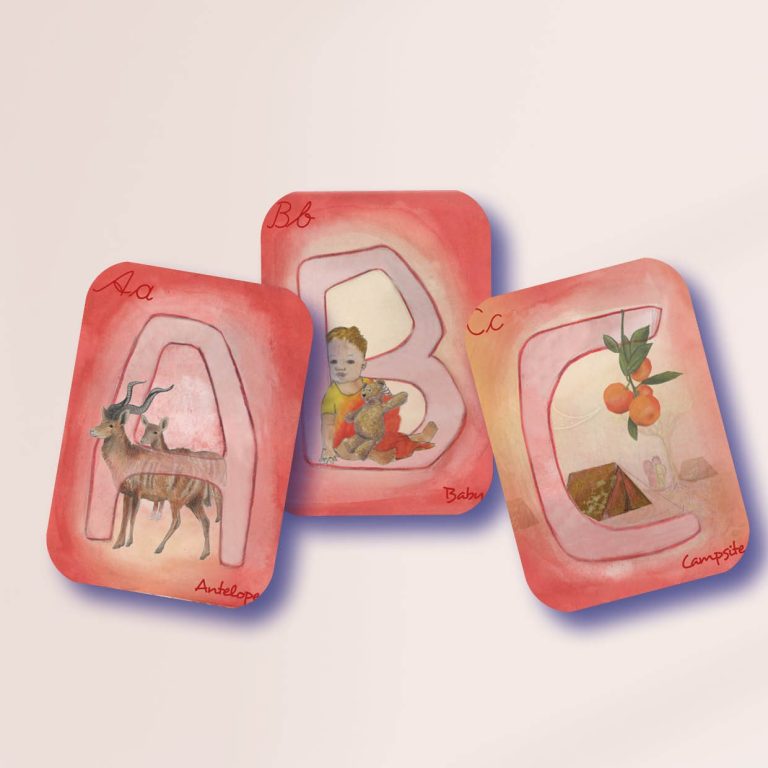
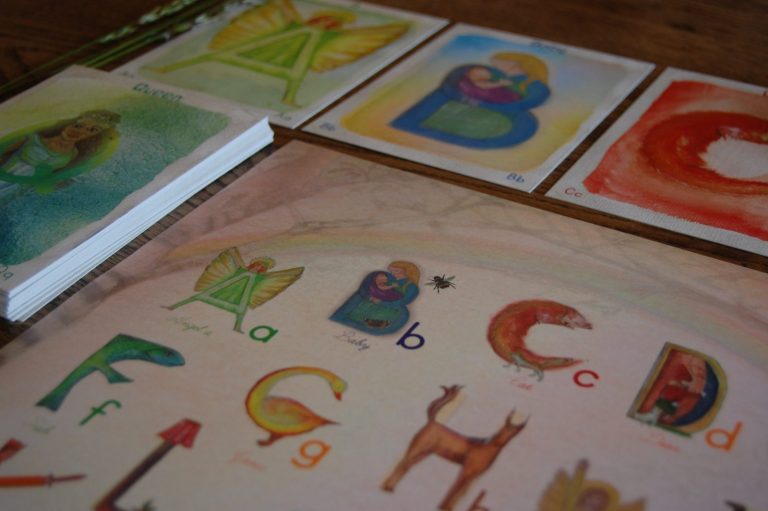
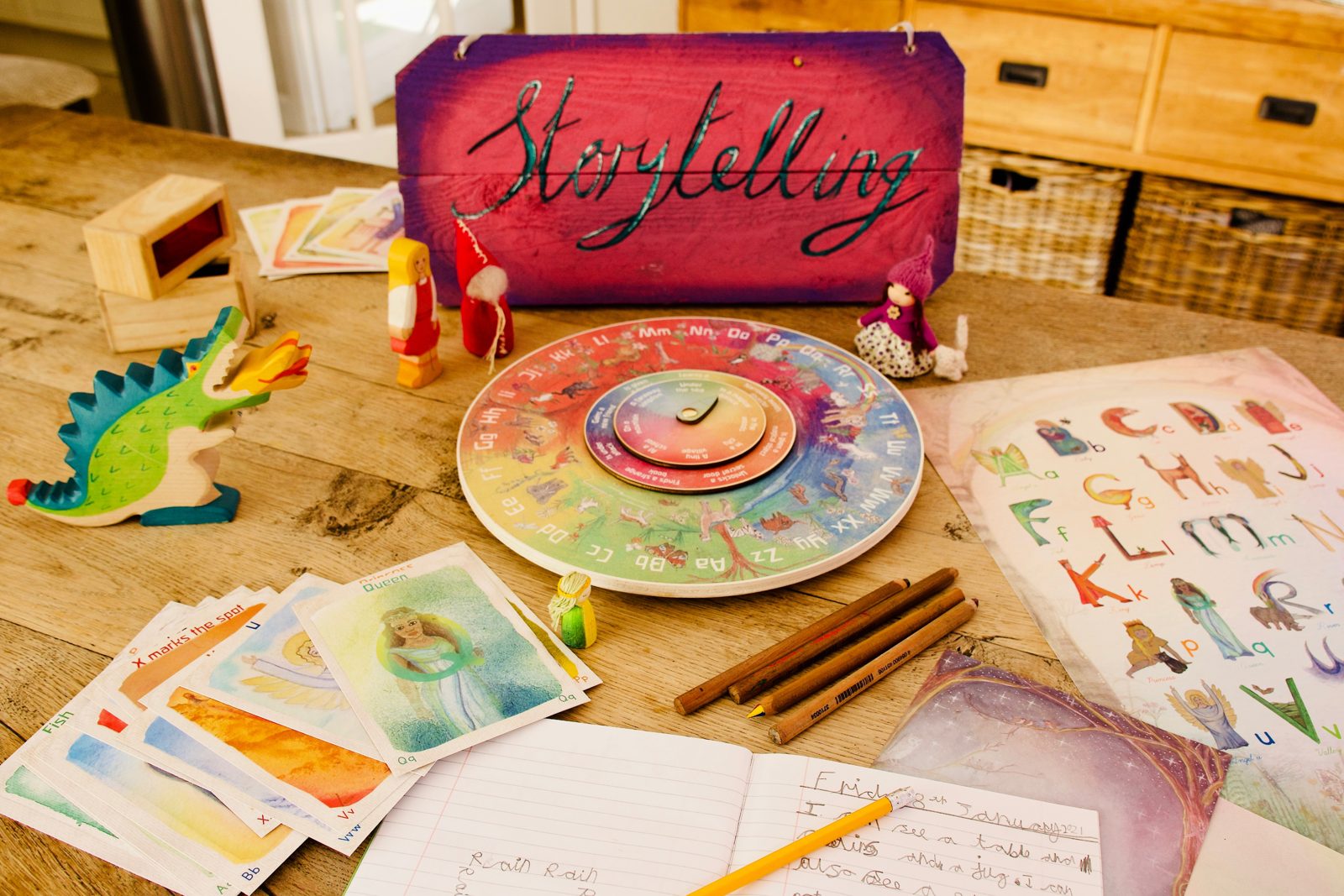
Our hand-illustrated Wilded Alphabet Cards give every letter a character and a story to start from.