
How living seasonally helps children develop
Children are naturally curious about the world, which makes childhood a wonderful time to introduce the festivals of their ancestors and of people around them. Living seasonally at home connects children to their place and to something much larger than themselves – their community, their land, even the cosmos.
What is living seasonally?
When we live with the seasons, we become closer to nature. We begin to notice the days, weeks, months and seasonal changes. We stop resenting certain times of year or kinds of weather, and we teach children to connect with their environment and coexist with the wider world.
We can also share the cultural and spiritual connections to the seasons. Many festivals are based on nature, the calendar or the moon, and we can feel our own human experience weaving into the patterns of plants and animals.
In the modern world it’s all too easy to forget this. We have parties, school, work and the gym – things that don’t depend on the time of year – and it’s easy to overlook the delicate transformation happening around us. But can we, through the way we live, stay aware of what’s unfolding in the natural world?
What it looks like for us
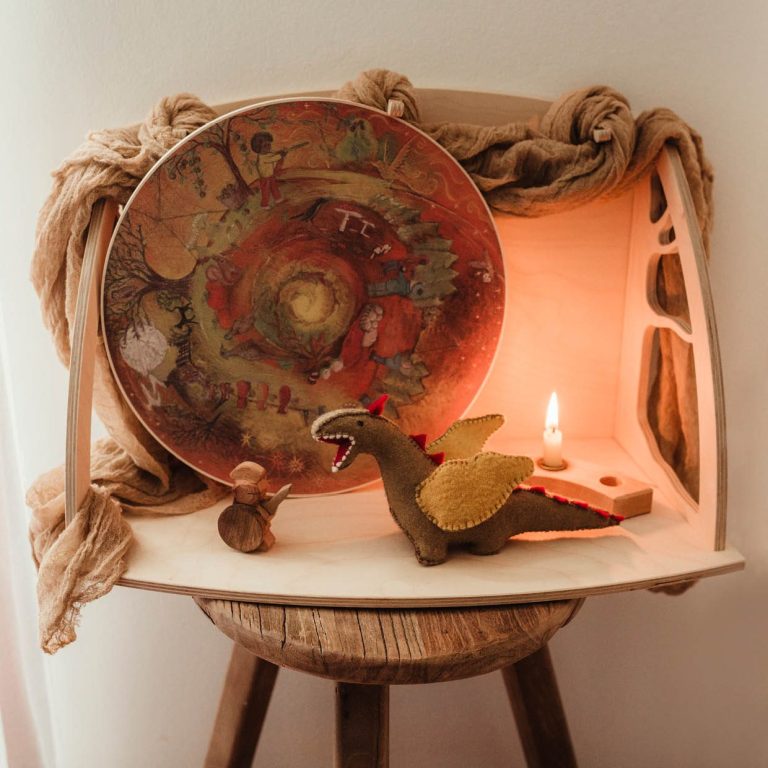
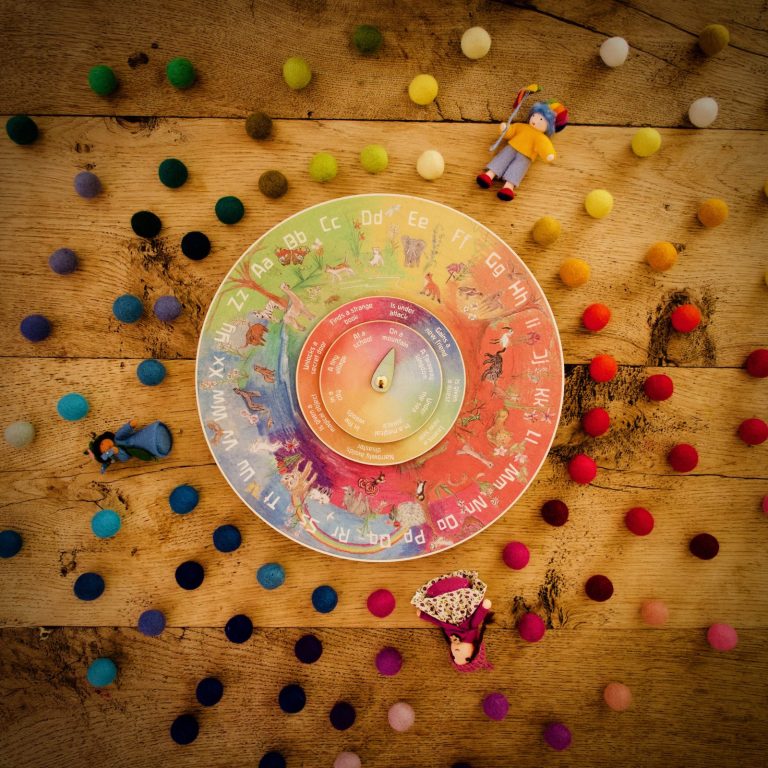
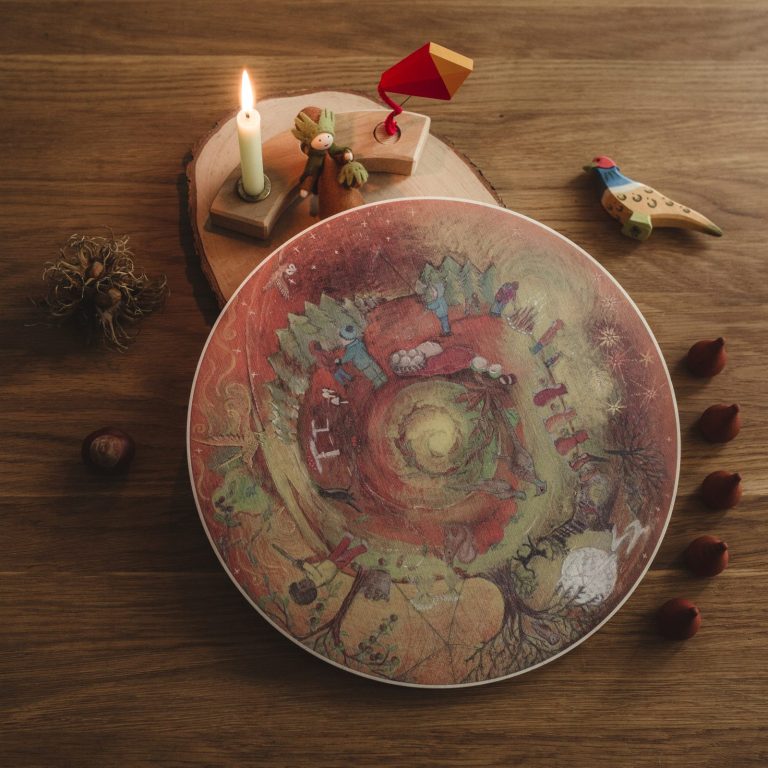
Seasonal living means different things to different families. For us, it means supplementing what we grow with a weekly organic veg box, so our food is local and seasonal (and delicious). Weekends are filled with walks in the woods and fields. We decorate the house and table for each season, keep a nature table, and the children turn our perpetual calendar.
We also have family traditions we repeat every year. We pick and process the apples from our trees over one weekend in autumn – and earlier in the year we wassail the trees (an old English tradition). The important part for us is that we don’t only visit the apple tree at harvest time; we visit it while it’s dormant too, seeing the full cycle.
Why festivals and traditions matter
Festivals are bursting with cultural and ancestral connection. Most aren’t new – depending on where you live, they may have been celebrated for centuries. They keep regional and family traditions alive, even when a family’s traditions differ from those around them.
Why understanding nature matters
Learning about natural cycles helps children understand seasonal food, changes in animal and plant behaviour and weather patterns – and how all of these provide the food, shelter and water that people, plants and animals depend on. They can also learn how things differ in other parts of the world.
When we experience nature inwardly, we feel part of something far greater than ourselves.
Final thoughts
There are many ways to help your child become aware of their environment, culture and festivals. You can explore how traditions differ around the world, keep the long-standing traditions of your own family – and create new ones.
The modern world wants us in a tumble dryer, spinning faster and faster. But if we can unplug and connect to the cycles of the natural world, I think we find a calm centre that benefits everyone.